As we say farewell to Namibia we are introduced to Botswana. As we had a few long drives, we learn about its history and culture and how it differs from neighboring countries. Our first stop introduced us to bushman life and the abundance that can be found to eat, drink, and methods for hunting. As we travel north we head into the Okavango Delta which is one of the most biodiverse regions in Africa. We get to canoe by a few hippos (thankfully not too close) and do a walking Safari before enjoying a quiet sunset at our campsite on the water!

A Bit of Botswana History
The following morning we were up early for a long drive into Botswana, most of which was through the Kalahari desert which straddles both Namibia and Botswana. Kalahari means “place of no water” in the San language. Botswana’s money is called Pula, which means rain or water in English, an important resource for those in the desert, and also is why their flag is mostly blue.

Throughout the history of Southern Africa, the colonizers of Dutch, French, British and French were trying to claim different regions for key harbors for resupply, and minerals such as diamonds and gold that were found. This included modern day South Africa, Namibia, Zimbabwe, Lesotho, and Eswatini. Meanwhile, present day Botswana was surrounded and at the time did not have any minerals that anyone was fighting over. The chiefs of the tribes in that area came together and decided to ask the British for protection which they agreed to as they had eventually planned to colonize there but were busy in the other regions.

As the world started to recognize what had been happening in southern Africa, the British stopped and and gradually left. These countries started to establish their own independence and for Botswana that was in 1966. Funnily enough they found diamonds just a few years later. Because they had never really been fully colonized, they were able to avoid much of the apartheid rules and the poverty that had been created in their neighboring countries. Much of their national identity, with the black and white on the flag and zebra as a national animal signifies racial unity. The chiefs of those same tribes are still involved in the government today and it really makes me happy to see a country that can embrace indigenous beginnings and prioritize unity.

When we reached that evening’s campsite, after setting up our tents several of us went on a walk with a bushman and bushwoman, and a translator, who shared information about various foods, medicinal plants, and hunting tricks, such as identifying this huge aardvark hole and using possibly even as a place to sleep.


Towards the end they showed a shelter that was in the early stages of building and they managed to make this fire just from twirling a stick. Materials were a little damp so it was quite the task to get enough heat to get the materials to catch, all three of them had to work together taking turns.
After saying goodbye to our hosts we headed back to camp. That evening we enjoyed time around the fire and had another Southern Africa dish called Boerewors and Pap (Sausages and maize paste). Demi said this was the thing her mom make when she comes home and is one of her favorite comfort foods.

Camping in the Okavango Delta
The following morning we had the first reminder of why you need to look under your tent before rolling it up, as a few people found this spider-scorpion thing that had burrowed into a hole under the warm and dark tent!
We had a bit of a drive this day but without any sightseeing stops along the way. At our shop stop we did see Altus, the driver that joined us in Namibia until Eddie’s visa was granted. He had started a tour with his wife as the CEO from Victoria falls and heading towards Cape Town.


We were at a campsite on the edge of town and we had most of the afternoon to relax. The following morning we had to packup our tent and luggage and just pack smaller overnight bags. We were picked up in safari vehicles and taken into the delta where we’d spend the night.

It was a bumpy driver with 45 minutes on a very potholed paved road and another 45 on dirt until we reached the gate. We were able to stop for restrooms at a restaurant where we saw an elephant enjoying breakfast among the trees.


The rest of the drive was like a mini Safari but as it was nearing noon at this point some animals weren’t as active as they’d be in the earlier morning, so mostly we saw birds and antelopes. We did spot a Maribou stork, which completed our Ugly 5, which also includes the Wildebeest, Hyena, Vulture, and Warthog!

Once we arrived, we were given a short safety briefing and then were able to take our bags to our tents. We were surprised how nice these were, they had actual beds, a large sized tent that you could fully stand up in, and a separate tarped off area for the bathroom giving privacy and protection from wild animals such as hyenas and hippos. The top was open and a few areas were open to the ground such as where the shower was located. It sounds like this was a new camp to be used for this trip or they had recently upgraded, but a welcome surprise!

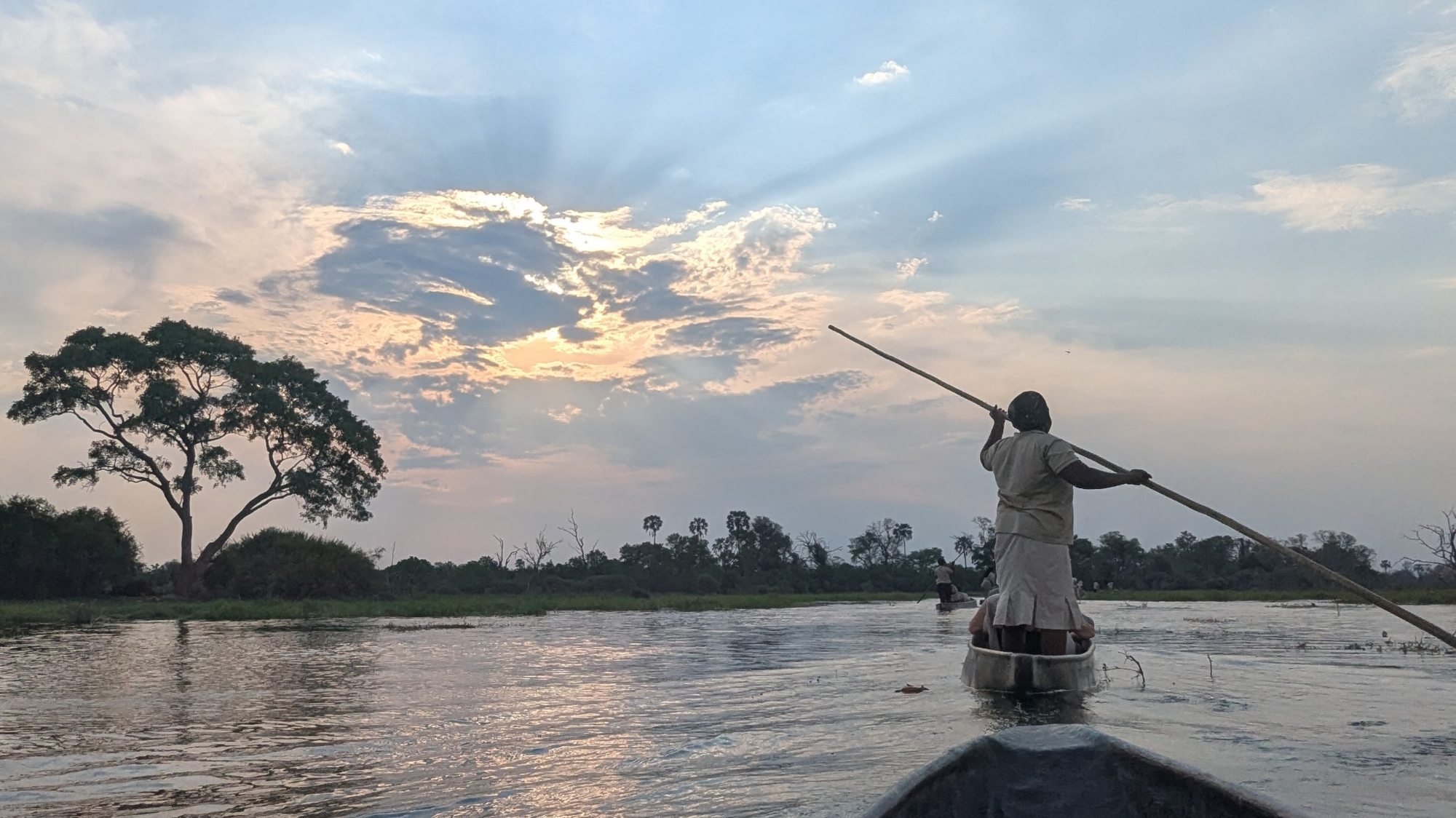
After lunch several of us played cards under the shade of the dining tent. It was so hot outside it was the best place to be in shade and still get a cool breeze coming off the water once in awhile. By 4pm our polers arrived and we boarded our canoes. It was 2 per canoe and you sat on the floor, so it felt more like a kayak, and the polers stood in the back with long poles and pushed us along.


The polers were taking us to a walking Safari where we were split into two groups and were given instructions on how to follow hands signals in case we did see a lion or another animal that might attack. Thankfully we didn’t need these instructions but we did see quite a few different animals and he showed us several plans. The largest were the buffalo, zebra, elephants, and giraffes, but the most difficult to see was this owl hiding in the tree!

After about an hour we were poled back to our campsite, and along the way were gifted with some amazing skies!

This was just so peaceful, it nearly brought me to tears. I really love being right on the water like this! We took a few photos of our fellow travelers and also caught a hippo welcoming us back to the campsite.


We all sat along the shore watching the sunset and the hippos out in the water, enjoying a few beverages.

Then dinner was ready, all our meals here were cooked by the camp and I enjoyed it all, but forgot to take more pictures. After dinner, it began to rain, and there were some crazy thunder and lightning!

I had opted for a shower after dinner so they had boiled water and put it in a bladder hanging in our bathroom area. So I took a quick shower in the rain, while it was thundering, but it was nice to rinse off after it being such a hot and sweaty day!
Next Time
As we leave the Delta, several animals decided to say hi, including hyenas, wild dogs, and some interesting mating displays from the ground hornbill. We head to a unique accommodation where we are camping by an elephant highway and then have a Safari cruise on the Chobe River. We head into Zimbabwe to our final destination of this 3 week Overlanding journey, Victoria Falls! Until next time, Tomaya Sente!


Leave a Reply